
The Science Behind Praying Mantis Striking Angles and Timing
Title: The Praying Mantis: Mastering the Art of Striking Angles in Martial Arts
Meta Description: Explore the fascinating world of the Praying Mantis style in martial arts. Learn about striking angles, timing, biomechanics, and how these elements can enhance your self-defense skills.
Focus KW: Praying Mantis martial arts
The Praying Mantis style of martial arts is a unique and captivating discipline that draws inspiration from the natural world. Named after the insect known for its distinctive posture and striking abilities, this martial art emphasizes the importance of angles in combat. Practitioners learn to move fluidly and strike with precision, mimicking the way a mantis captures its prey. The beauty of this style lies not only in its effectiveness but also in its philosophy, which encourages students to be adaptable and aware of their surroundings.
In the Praying Mantis system, striking angles are paramount. Unlike many traditional martial arts that focus on direct attacks, this style teaches students to approach their opponents from unexpected angles. This unpredictability can create openings for effective strikes while minimizing the risk of counterattacks. By mastering these angles, practitioners can develop a deeper understanding of movement and timing, which are essential components of successful martial arts techniques.
In exploring the fascinating mechanics of the praying mantis and its striking angles and timing, readers may find it insightful to delve into a related article that discusses the broader implications of these predatory techniques in martial arts. This article highlights how the principles observed in the praying mantis can be applied to enhance human movement and combat strategies. For more information, you can read the full article at Martial Skill Newsletter.
The Importance of Timing in Praying Mantis Strikes
Timing is a critical element in any martial art, but it takes on a special significance in the Praying Mantis style. The ability to strike at precisely the right moment can mean the difference between landing a successful hit and leaving oneself vulnerable to an opponent’s counterattack. In this discipline, students learn to cultivate a keen sense of timing through rigorous training and practice. This involves not only understanding their own movements but also anticipating the actions of their opponents.
Practitioners often engage in drills that emphasize timing, such as sparring sessions where they must react quickly to their partner’s movements. This training helps them develop an instinct for when to strike and when to hold back. The goal is to create a seamless flow of movement that allows for quick adjustments based on the dynamics of the fight. As students progress, they become more adept at recognizing patterns in their opponents’ behavior, enabling them to exploit openings with precision timing.
The Science of Combat: How Praying Mantises Utilize Striking Angles
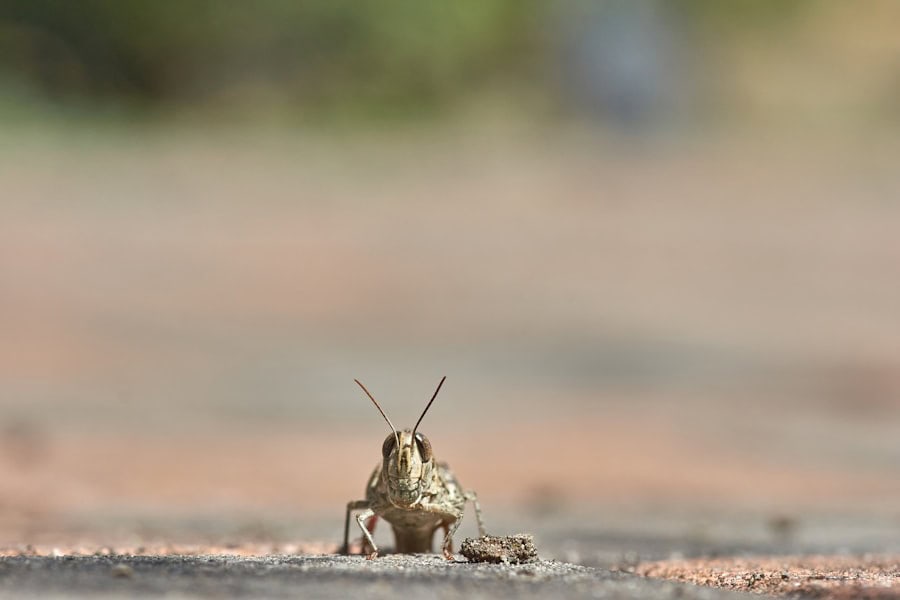
The Praying Mantis style is not just an art form; it is also rooted in the science of combat. The way a mantis strikes is a testament to its evolutionary adaptations, which have honed its ability to capture prey efficiently. In martial arts, understanding these principles can enhance a student’s effectiveness in combat situations. By studying the mechanics behind striking angles, practitioners can learn to apply these concepts to their own techniques.
One key aspect of this science is the concept of leverage. When a mantis strikes, it uses its body weight and positioning to maximize the impact of its attack. Similarly, martial artists can learn to position themselves advantageously to generate more power behind their strikes. This involves not only physical strength but also an understanding of body mechanics and movement dynamics. By applying these principles, students can improve their striking capabilities and become more formidable opponents.
The Role of Visual Perception in Praying Mantis Strikes

Visual perception plays a crucial role in the effectiveness of Praying Mantis strikes. Just as the insect relies on its keen eyesight to detect movement and gauge distance, martial artists must develop their own visual acuity to succeed in combat. This involves training the eyes to recognize subtle cues from opponents, such as shifts in weight or changes in posture that may indicate an impending attack.
In practice, this means that students must learn to focus not only on their own movements but also on those of their opponents. By honing their visual perception skills, they can anticipate actions and react accordingly. This heightened awareness allows practitioners to exploit openings and execute strikes with precision. Over time, this ability becomes second nature, enabling martial artists to respond instinctively to various combat scenarios.
In exploring the fascinating mechanics of the praying mantis, one can gain deeper insights into its striking angles and timing by examining related topics in the field of martial arts. For instance, the article on the MartialSkill University website provides an intriguing overview of how the principles of the seven-star praying mantis style can enhance martial techniques. You can read more about this connection in the article here, where the unique movements and strategies inspired by this remarkable insect are discussed in detail.
Understanding the Biomechanics of Praying Mantis Strikes
| Metric | Value | Unit | Description |
|---|---|---|---|
| Strike Speed | 20 | milliseconds | Time taken from initiation to completion of the strike |
| Strike Angle | 45 | degrees | Optimal angle of foreleg movement for successful prey capture |
| Foreleg Acceleration | 500 | m/s² | Acceleration of the mantis foreleg during the strike |
| Reaction Time | 30 | milliseconds | Time taken to detect prey and initiate strike |
| Strike Distance | 5 | centimeters | Maximum effective reach of the mantis foreleg during strike |
| Success Rate | 85 | percent | Percentage of strikes resulting in successful prey capture |
Biomechanics is the study of how living organisms move, and it plays a significant role in understanding the effectiveness of Praying Mantis strikes. By analyzing the movements involved in striking techniques, practitioners can gain insights into how to optimize their performance. This includes examining factors such as body alignment, weight distribution, and joint mechanics.
For instance, when executing a strike, a martial artist must ensure that their body is aligned correctly to generate maximum force. This involves engaging core muscles and utilizing proper footwork to maintain balance while delivering powerful strikes. By studying these biomechanical principles, students can refine their techniques and reduce the risk of injury during training or combat.
In exploring the fascinating mechanics of the praying mantis and its striking angles, one can find additional insights in a related article that delves into the intricacies of martial arts techniques inspired by nature. This article discusses how various animals, including the mantis, influence the development of combat skills and strategies. For those interested in understanding the connection between animal behavior and martial arts, you can read more about it in this informative piece.
The Evolutionary Adaptations of Praying Mantis Striking Angles and Timing
The striking angles and timing employed by Praying Mantises are not arbitrary; they are the result of millions of years of evolutionary adaptations. These insects have developed specialized hunting techniques that allow them to capture prey with remarkable efficiency. Understanding these adaptations can provide valuable insights for martial artists seeking to enhance their own skills.
For example, mantises often employ ambush tactics, waiting patiently for the right moment to strike. This patience is mirrored in martial arts training, where students learn the importance of timing and strategy over brute force. By adopting a similar mindset, practitioners can become more effective fighters who rely on skillful execution rather than sheer strength.
The Influence of Environmental Factors on Praying Mantis Striking Angles and Timing
Environmental factors play a significant role in shaping the striking angles and timing of Praying Mantises. These insects are highly attuned to their surroundings, using visual cues from their environment to inform their actions. In martial arts, understanding how environmental factors influence combat can help practitioners adapt their techniques accordingly.
For instance, lighting conditions can affect visibility during a fight, making it essential for martial artists to adjust their strategies based on their surroundings. Additionally, factors such as terrain and space can impact movement patterns and striking angles. By being aware of these influences, students can develop a more versatile approach to combat that takes into account the unique challenges presented by different environments.
The Implications of Praying Mantis Striking Angles and Timing in Martial Arts and Self-Defense
The principles derived from studying Praying Mantis striking angles and timing have profound implications for martial arts training and self-defense strategies. By incorporating these concepts into their practice, students can enhance their overall effectiveness in combat situations. This includes developing a deeper understanding of movement dynamics, timing, and visual perception—all essential skills for any martial artist.
Moreover, these principles can be applied beyond traditional sparring sessions or competitions. In real-world self-defense scenarios, being able to strike from unexpected angles and time attacks effectively can make all the difference in protecting oneself from harm. By embracing the lessons learned from the Praying Mantis style, martial artists can cultivate a mindset that prioritizes adaptability and awareness—qualities that are invaluable both on and off the mat.
In conclusion, the Praying Mantis style offers a wealth of knowledge for martial arts enthusiasts and would-be students alike. By exploring striking angles, timing, biomechanics, and environmental influences, practitioners can develop a comprehensive understanding of combat that transcends mere physical techniques. Whether you are just starting your journey or looking to deepen your existing skills, embracing the wisdom of the Praying Mantis can lead you toward greater mastery in martial arts and self-defense.
Join MartialSkill University Today – It’s Free
FAQs
What makes the praying mantis’s striking technique unique?
The praying mantis uses a combination of precise angles and rapid timing to capture prey effectively. Its forelegs strike with remarkable speed and accuracy, allowing it to seize insects before they can escape.
How does the praying mantis determine the angle of its strike?
The mantis calculates the optimal striking angle based on the position and movement of its prey. Its compound eyes provide depth perception, enabling it to judge distance and adjust its strike trajectory accordingly.
What role does timing play in the mantis’s hunting success?
Timing is critical; the mantis must strike at the exact moment when the prey is within reach but not yet aware of the attack. This split-second timing maximizes the chance of a successful capture.
Are there any scientific studies that analyze the mantis’s striking mechanics?
Yes, researchers have used high-speed cameras and motion analysis to study the mantis’s strike. These studies reveal that the mantis can strike in as little as 20 to 30 milliseconds, showcasing its rapid response capabilities.
Can understanding the mantis’s striking strategy benefit robotics or technology?
Absolutely. Insights into the mantis’s precise angles and timing have inspired the design of robotic arms and grasping mechanisms that require speed and accuracy, improving efficiency in automated systems.
Student Testimonials

